
SPACEX: What The Largest IPO in History Reminds Us About Investing for the Long Run
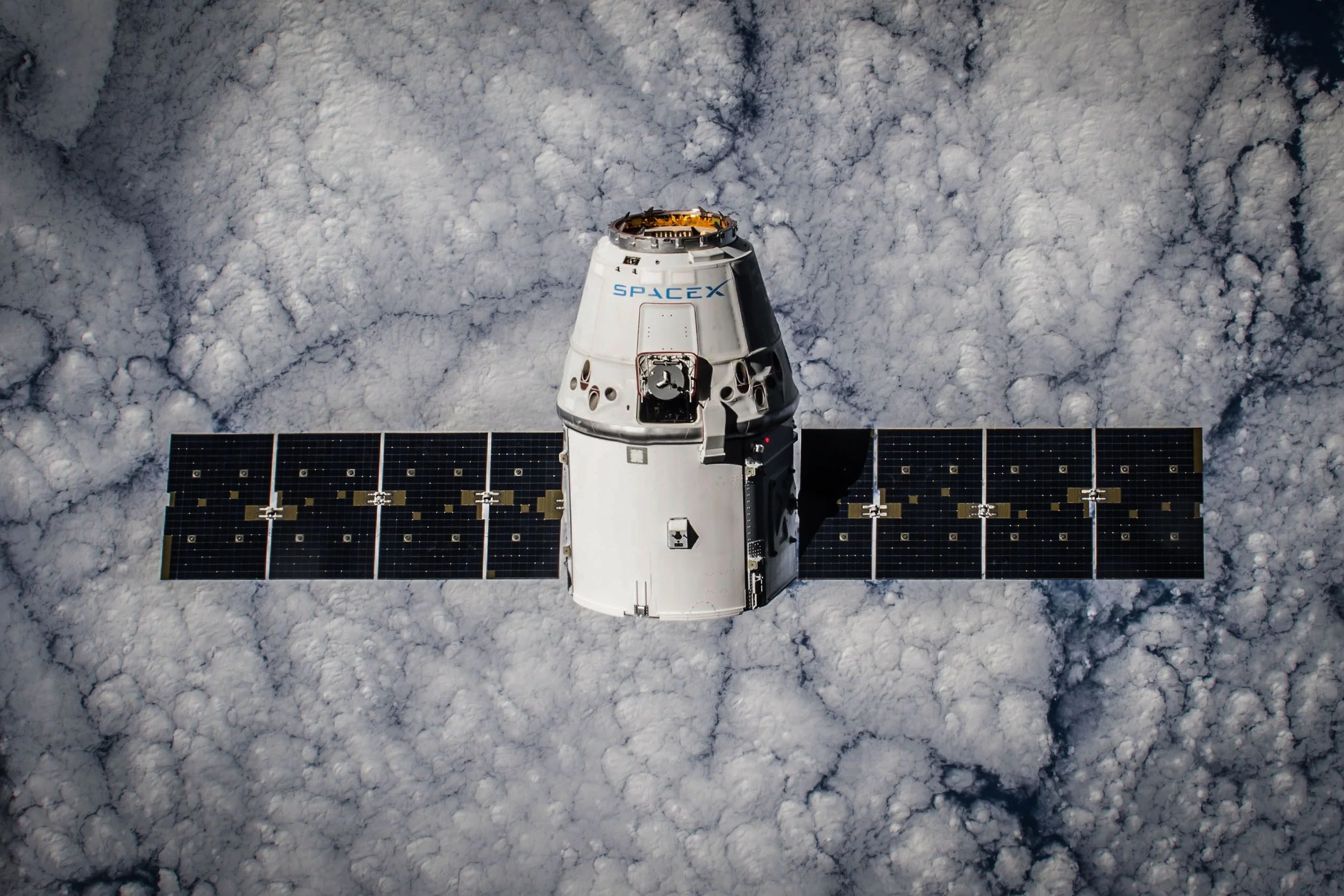
WELCOME TO SPACEX IPO DAY!
What The Largest IPO in History Reminds Us About Investing for the Long Run
A note to Longwave clients — June 2026
Over nearly 25 years as a Financial Advisor, I’ve never received more questions about a specific topic than I have in the past two weeks around today’s SpaceX IPO. Some questions were how do I get into this, some were how do I stay out of this and others were just curious. If you have been even casually paying attention to the news, you could not miss all the headlines about SpaceX.
Thank you as always for bringing us your questions – and, as always, these deserve a real answer rather than a hot take. So rather than tell you what to do with a single stock, we want to do something more useful — walk you through how we think about a moment like this. The SpaceX IPO turns out to be an almost perfect teaching example, because it sits at the intersection of genuine excitement, eye-watering numbers, and a body of evidence that most investors never see.
Why everyone is talking about SpaceX
Today, June 12, SpaceX began trading on the Nasdaq under the ticker SPCX, completing the largest initial public offering ever recorded. Let’s start with the sheer scale. At its offering price of $135 per share, SpaceX was valued at roughly $1.77 trillion and raised about $75 billion in a single day — figures that would make it one of the seven most valuable public companies in the United States, larger than Tesla. No company has ever gone public at anything close to this size.
The most fascinating headline of all is a personal one. Pricing the shares tipped Elon Musk's net worth past $1 trillion, making him — at least on paper — the first trillionaire in history. He owns roughly 42% of SpaceX; before the offering, Forbes pegged his fortune near $800 billion, and the listing pushed him over the line, ahead of the next several richest people on earth combined.
Then add the personalities and the product. Musk is the most-watched businessperson alive, and SpaceX is the rare company whose work — reusable rockets and a satellite-internet network reaching the most remote corners of the planet — captures the public imagination in a way a software company rarely does.
The attention, in other words, is understandable. The hard part of investing is rarely recognizing that something is exciting. It's deciding what, if anything, the excitement should change about your plan.
What you're actually buying: three businesses under one roof
It helps to understand that SpaceX isn't one company so much as three, each at a very different stage of maturity and profitability.
Rockets — the proven engine.
This is the original business and still the foundation. The Falcon 9, the world's first routinely reusable orbital rocket, has made SpaceX the dominant launch provider on the planet, carrying commercial satellites, government payloads, and — via the Dragon capsule — NASA astronauts to and from the International Space Station. Layered on top is Starship, the enormous next-generation, fully reusable rocket into which SpaceX has poured more than $15 billion. Starship is central both to Musk's Mars ambitions and to the next phase of Starlink, but it remains in testing: the company flew five Starship missions in 2025 against a target of 25, with another flight test in May 2026. So this division pairs a cash-generative, proven franchise with an expensive, still-unproven bet.
Starlink — the cash machine.
The satellite-internet business is SpaceX's financial workhorse and its only consistently profitable division. Starlink's subscriber base has roughly doubled every year — from 2.3 million at the end of 2023 to 4.6 million in 2024 to around 10 million by the end of 2025 — generating about $11.4 billion in revenue last year, roughly 60% of the company's total. With more than 9,000 operational satellites and a direct-to-cell partnership aimed at eliminating cellular dead zones, Starlink is also the clearest example of SpaceX's real-world impact: broadband for rural, remote, and underserved regions that terrestrial networks never reached.
AI — the newest and most speculative.
In February 2026, SpaceX absorbed Musk's artificial-intelligence venture, xAI — maker of the Grok chatbot — in a merger that valued the combined entity at $1.25 trillion. Alongside Grok, this segment sells AI computing capacity to outside companies, reportedly including Anthropic and Alphabet. It is also the most capital-hungry of the three and a major reason the company's finances turned sharply negative.
Put the three together and the financial picture is striking. SpaceX generated roughly $18 billion in revenue in 2025, but swung from a small net profit in 2024 to a net loss of nearly $5 billion last year, driven by the cost of integrating xAI and building out AI infrastructure. At $1.77 trillion, then, investors are paying roughly 95 times the company's sales — and effectively nothing of that price is supported by current profits. Here's the crucial twist: the businesses making money today are the rockets and the satellites, while the AI division loses billions and consumes more capital than the other two combined.
Yet it is the AI bet that carries most of the company's future value. By SpaceX's own addressable-market figures, highlighted in a recent analysis by Vuk Vukovic of the investment firm Oraclum Capital, artificial intelligence accounts for about 93% of the total opportunity the company is pitching to investors — meaning the proven, profitable businesses underpin only a sliver of the story being priced in. This is especially important because although SpaceX is dominant in satellites and rockets, the AI space is much more crowded. Not everyone is convinced the price is right: Morningstar's analysts pegged fair value at less than half the IPO valuation and suggested patient investors would likely find better entry points down the road.
Furthermore, because Longwave thinks keenly about environmental, governance and social risks, we pay close attention to how a company is run. Following the offering, Musk retains more than 82% of the voting power, and the company is woven together with his other ventures through a web of related-party transactions. None of this makes SpaceX a bad company. It does mean ordinary shareholders have very little say — a factor we weigh rather than wave away.
A wrinkle the headlines miss: how a stock like this enters the indexes
Many of you own broad index funds, so a natural question is whether you already own SpaceX, or soon will, simply by holding the market. The answer is more nuanced than the $1.77 trillion number suggests.
Major stock indexes weight their holdings by float-adjusted market capitalization — that is, by the value of shares actually available to public investors, not the company's total size. SpaceX floated only about 4.2% of its shares in the IPO. So even where it is added to an index, its weight will reflect that small sliver, not the full headline valuation.
The two best-known indexes are also taking opposite approaches. The S&P 500 requires a company to be profitable and to have a sufficient public float before it can join — criteria SpaceX does not currently meet, which could keep it out for years. The Nasdaq-100, by contrast, recently rewrote its rules — dropping its minimum-float requirement — to fast-track large new listings roughly 15 trading days after they debut. Even so, analysts estimate SpaceX would account for only about 1% of the Nasdaq-100, despite ranking among the very largest companies in the country by total value. The practical takeaway: any "automatic" index buying of SpaceX will be smaller, slower, and more concentrated than the company's size implies.
What history says about buying the hype
Here is where the evidence gets genuinely useful — and where it pays to separate the first day from the long run.
IPOs very often "pop" on day one. The IPOs led by Goldman Sachs (SpaceX's lead underwriter) from 2012 through 2021 jumped about 28% on average on their first day. That's a wonderful day for the institutions granted shares at the offer price. The trouble is what comes next. Decades of research by Professor Jay Ritter of the University of Florida — known in the field as "Mr. IPO" — show that an investor who buys at the first-day closing price and holds on has, on average, trailed the broad market by roughly 20% over the following three years, or about 5.5% per year. For that same Goldman cohort, the three-year market-adjusted return was about negative 26%. Unprofitable companies — again, SpaceX's current profile — have historically fared the worst.
Part of the reason is mechanical: when a company goes public, insiders and early investors are typically barred from selling for a "lockup" period of about 180 days, and as that window expires the resulting wave of insider selling floods the market with additional shares and tends to push the price down. SpaceX makes this especially worth watching — while Musk has committed to an unusually long 366-day lockup, the company's staggered schedule lets other insiders begin selling far earlier, some shares as soon as two trading days after its first quarterly earnings report this summer.
To be clear, this isn't a prediction that SpaceX will disappoint. A small portion of IPOs have had short-term as well as long-term success. It's just a reminder that, after the cameras leave, the typical IPO buyer would have done better simply owning a diversified index fund.
The uncomfortable math of single stocks
Step back even further and the case for humility grows stronger. In a landmark study, Professor Hendrik Bessembinder examined nearly every U.S. stock from 1926 onward and found that just over 4% of companies accounted for all of the net wealth the stock market created above the return on Treasury bills. The other 96% collectively did no better than cash. More than half of all individual stocks actually lost money relative to one-month Treasury bills over their lifetimes, and the median stock posted a negative return.
The market goes up over time, in other words, not because most companies win, but because a small handful win enormously and carry everyone else. And those long-run laggards are disproportionately the newer, faster-growing, less-profitable companies that crowd into public markets during exciting periods — precisely the cohort a marquee IPO belongs to.
This is not an argument against owning stocks. It is the single most powerful argument for owning a lot of them. If only a few companies will produce the bulk of tomorrow's gains, the surest way to capture them is to hold a broad, diversified slice of the market rather than to gamble on guessing which name it will be.
How we think about it at Longwave
Here's the encouraging part. You don't have to make a single bold bet to share in breakthroughs like the ones envisioned by SpaceX. A broadly diversified, evidence-based portfolio already gives you a stake in the innovators reshaping the economy. This may at some point include SpaceX if it meets our fund partners’ criteria for profitability and good governance. Our work is to build exactly that kind of portfolio: aligned with your values, grounded in decades of evidence about how wealth actually compounds, and steady enough to keep you invested through every loud and exciting week. Seen that way, discipline isn't a brake on opportunity — it's what keeps you in the game long enough to capture it. So if this moment has you thinking bigger, let's talk: not about chasing an open, but about making sure your plan is built for the long arc of progress you're investing in.
— Nathan Munits, Founder, Longwave Financial
This material is for informational and educational purposes only and does not constitute an offer or solicitation to buy or sell any security, nor a recommendation regarding any investment. Mentions of specific companies are illustrative and are not endorsements. Past performance and academic research are not guarantees of future results; all investing involves risk, including the possible loss of principal. Diversification does not ensure a profit or protect against loss. Please consult your Longwave advisor regarding your individual situation. Securities and advisory services offered through Commonwealth Financial Network®, Member FINRA/SIPC, a Registered Investment Adviser.
Risks with investing in initial public offerings (IPOs) include extreme price volatility, limited operating history and potential ownership dilution. They may not be appropriate for every investor. You should read the prospectus carefully and make your own determination of whether an investment in the offering is consistent with your investment objectives, financial situation, and risk tolerance.
Sources:
Forbes, SpaceX’s IPO Just Made Elon Musk The World’s First Trillionaire, 2026.
BigGo Finance, 45-Year Study Shows Buying IPOs on Day One Leads to Underperformance Three Years Later, 2026.
SSRN, One Hundred Years in the U.S. Stock Markets, 2026.
Author: Nathan Munits, CRPC®, AIF®
Founder & Senior Financial Advisor, Longwave Financial
Nathan Munits, CRPC®, AIF®, is the Founder and Senior Financial Advisor at Longwave Financial, where he provides independent, fee-based financial planning and investment advice as a fiduciary. Before founding Longwave, Nathan spent 10 years at Ameriprise Financial, where he became one of the youngest advisors to reach Private Wealth Advisor status, the firm's highest tier of recognition.
Nathan holds the Chartered Retirement Planning Counselor (CRPC®) designation from the College for Financial Planning and is an Accredited Investment Fiduciary® (AIF®). He also holds a BA in Philosophy from Queens College. His approach centers on comprehensive financial planning grounded in three principles: independent advice, fiduciary commitment, and long-term client collaboration.
Born in Riga, Latvia, and raised in the US after his family immigrated when he was five, Nathan brings a first-generation perspective to helping clients build lasting financial security.