
BEHIND THE LABEL: McCormick & Company. What's Really Inside the Red-Capped Bottle on Your Spice Rack

A note to Longwave clients — June 2026
In 1667, the Dutch and the English ended a war by trading two islands. The English gave up a speck of land in the Banda Sea called Run, which was two miles long, half a mile wide, and one of the only places on earth where nutmeg grew. In return, the Dutch handed over a swampy fur-trading outpost they considered the lesser prize: an island called Manhattan. Almost everyone thought the Dutch had won the exchange. Nutmeg was selling in Europe at a markup of nearly 6,000%, and they'd just locked up the entire supply by conquering the Bandanese people who grew it.
History had other plans for the lesser prize. Four hundred years later, that fur-trading outpost is now the city many Longwave clients call home, and spice is still a globally traded commodity moving through the same handful of climate-sensitive regions. What's changed since colonial times isn't the importance of the supply chain. It's whether the companies that depend on it take responsibility for the people and places at the other end.
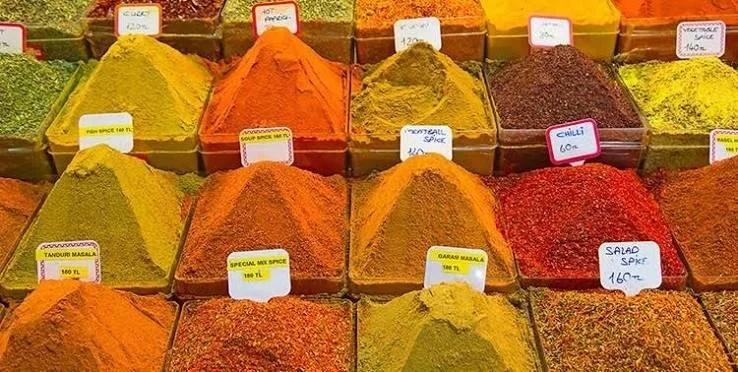
The old cliché about sausage is that you really don't want to know how it's made. Longwave clients are different — you do want to know. That's exactly the question we put to our fund partners when we build sustainably oriented portfolios: not just what a company sells, but how it sources. Today, we'd like to spotlight one concrete example of what looking beyond the label really means, in this case, from a company whose product is probably sitting in your kitchen right now.
More than a spice company
McCormick & Company is the dominant player in a category that rewards dominance. With almost $7 billion in annual sales and more than 14,000 employees worldwide, it supplies spices, herbs, seasonings, condiments, and flavor solutions to both everyday shoppers and the broader food and beverage industry. The spice aisle offers limited shelf space, low product turnover, and strong brand loyalty, which means the company that earns those red-capped spots tends to keep them. Beyond the flagship brand, you likely know Frank’s RedHot, Old Bay, and Stubb’s as well.
What makes McCormick & Company interesting from an investment standpoint isn’t only the brand moat. It’s that the company has recognized its supply chain is its single greatest vulnerability and chosen to invest in strengthening it rather than simply extracting from it. A business that secures the quality and continuity of its ingredients, lowers its waste and resource costs, and earns the loyalty of the farmers it depends on is building something that eventually shows up where it counts: in margins, in consistency, and in long-term earnings power.
Grown for Good
In 2019, McCormick & Company formalized that commitment in a framework it calls Grown for Good, a program spanning 16 commodities across more than 54,000 acres of farmland in 11 countries. It’s built around three goals: strengthen the communities it sources from, improve the resilience of its ingredient supply, and reduce the environmental footprint of its operations. Those happen to be the same qualities the fund managers we partner with tend to look for when they judge whether a business is built to last.
That last goal matters more for a spice company than for almost any other kind of business. Vanilla requires a specific climate and months of hand-pollination. Black pepper, among the most traded spices in the world, is highly sensitive to rainfall. Cinnamon sourcing in Sri Lanka and Vietnam has historically been linked to labor abuses. These aren’t abstract ESG talking points; they’re actual operational risks. And they’re exactly the kind of risk the managers we partner with are paid to scrutinize whether a company is getting ahead of them, rather than waiting for a disruption to force its hand.
Here is what Grown for Good looks like in practice:
53,000+ farmers across India, Vietnam, Madagascar, Indonesia, and Turkey supported by resiliency programs
95% of iconic ingredients — black pepper, cinnamon, vanilla, and oregano among them — sustainably sourced, with red pepper the remaining focus area
37% reduction in Scope 1 and Scope 2 greenhouse gas emissions, approaching the company’s 42% target for 2030
$17M+ co-invested globally alongside suppliers and donors to support local farmers
6% reduction in water use while recycling 75% of all solid waste through 2024
Over 7,700 employees who together helped donate $11 million to charities worldwide for the company’s 135th anniversary
Behind those numbers are outcomes that connect directly to supply-chain durability. In Jaisalmer, India, McCormick funded watershed projects that delivered clean drinking and irrigation water, protecting both local health and crop viability. In Vietnam, it helped train more than 1,000 cinnamon farmers and convert over 5,000 acres of conventional farmland to certified organic cultivation. These are not public-relations exercises. They are investments in the reliability of a supply chain that can’t easily be replicated or relocated.
How this connects to your portfolio
When we built the Longwave approach, we made a deliberate choice to work with fund partners who analyze companies the way we believe long-term investors should, by looking at the full picture of a business, not just its most recent quarter. The institutional ESG manager we work with in this strategy has been doing exactly that since 1975, making them among the longest-tenured in the country. Every company in its funds is reviewed at the same time by a securities analyst and an ESG analyst, working together to assess what we’d call the whole health of a business.
That rigor is why their read on McCormick & Company lands not as a sustainability endorsement but as a financial one. Their conclusion is that Grown for Good is neither a cost center nor a branding initiative but rather as a source of competitive strength, and it shows up in the numbers:
Products built around sustainable sourcing and health benefits are opening new markets as consumer preferences shift toward consciously produced alternatives
Year over year, a growing share of McCormick’s ingredients meets sustainable-sourcing standards, keeping the company ahead of competitors who noticeably lag
Gains in resource efficiency have contributed to stronger operations and to the long-term financial quality of the business
We return to this analysis often because it illustrates the connection we most want our clients to see clearly: the values embedded in how a company operates and the financial quality of that company are not in tension. In McCormick’s case, they reinforce each other. That’s precisely the kind of company we hope ends up in your portfolio and the reason we choose fund partners who are looking for it.
Your portfolio, your story
The next time you reach for that red-capped jar, know that there’s more behind the label than a list of ingredients. Farmers supported across three continents. Emissions cut by more than a third. Watershed projects in rural India. Organic farmland taking root in Vietnam. Centuries after pepper and cinnamon moved entire economies, the trade that once built empires is still shaping communities. Only now, the best companies in it are doing something the empires never did: investing in the people and places that make the whole thing possible.
There’s a quieter point worth making here, because it shapes how we build your portfolio. The instinct many values-minded investors start with is exclusion, which means crossing off the industries or companies they’d rather not own. It’s an understandable impulse, and there’s a place for it. But a portfolio built only by subtraction mostly just keeps your hands clean. Our position is different: we’d rather promote the companies doing real good and stay engaged with the ones that can do better. That’s why we choose fund partners who don’t simply screen names out but vote their shares and press companies to improve. Because a business moves further with an engaged owner than an absent one. McCormick & Company is the kind of leader this approach is built to reward, and engagement is how the companies trailing it get pulled forward.
No company is perfect, and we don’t pretend otherwise. The managers we invest through aren’t searching for perfection. They’re searching for companies that are, at the very least, working toward a better and more equitable future, and being rewarded by the market for doing so. Through your investment with Longwave and our fund partners, you own a piece of that work. Seen that way, values-aligned investing isn’t a compromise on your returns. It’s a way of staying invested, for the long arc, in exactly the kind of progress you want to see.
— Nathan Munits, Founder, Longwave Financial
FAQ
Why am I reading about McCormick & Company?
Because supply chains can reveal a lot about business quality. McCormick is a familiar example of how sourcing, climate risk, farmer relationships, and operating discipline can all connect to long-term financial strength.
Is this a recommendation to buy McCormick stock?
No. McCormick & Company is used as an example, not as a recommendation to buy, sell, or hold any security.
Is sustainability actually financially relevant?
It can be. When sustainability efforts strengthen supply chains, reduce waste, protect resources, or build brand trust, they may also support the business's long-term quality.
Does values-aligned investing mean giving up returns?
The goal is to find companies where strong business practices and long-term financial potential reinforce each other. Values alignment is not treated as a substitute for investment discipline.
Why not just avoid imperfect companies?
Avoidance can be useful, but it is not the whole strategy. Longwave also believes in engagement: supporting companies that lead and encouraging others to improve.
What is the main takeaway?
The way a company makes and sources its products matters. For us, values-aligned investing means paying attention to both financial results and the real-world practices behind them.
Sources
Company figures and program outcomes drawn from McCormick & Company’s Grown for Good sustainability reporting. Investment analysis and conclusions drawn from fund manager company research.
This material is for informational and educational purposes only and does not constitute investment advice, nor an offer or solicitation to buy or sell any security or to adopt any investment strategy. Mentions of specific companies are illustrative and are not recommendations or endorsements. ESG criteria are a set of nonfinancial principles used alongside financial principles to evaluate potential investments. Past performance is not indicative of future results, and all investing involves risk, including the possible loss of principal. Please consult your Longwave advisor regarding your individual situation. Securities and advisory services offered through Commonwealth Financial Network®, Member FINRA/SIPC, a Registered Investment Adviser.
Author: Nathan Munits, CRPC®, AIF®
Founder & Senior Financial Advisor, Longwave Financial
Nathan Munits, CRPC®, AIF®, is the Founder and Senior Financial Advisor at Longwave Financial, where he provides independent, fee-based financial planning and investment advice as a fiduciary. Before founding Longwave, Nathan spent 10 years at Ameriprise Financial, where he became one of the youngest advisors to reach Private Wealth Advisor status, the firm's highest tier of recognition.
Nathan holds the Chartered Retirement Planning Counselor (CRPC®) designation from the College for Financial Planning and is an Accredited Investment Fiduciary® (AIF®). He also holds a BA in Philosophy from Queens College. His approach centers on comprehensive financial planning grounded in three principles: independent advice, fiduciary commitment, and long-term client collaboration.
Born in Riga, Latvia, and raised in the US after his family immigrated when he was five, Nathan brings a first-generation perspective to helping clients build lasting financial security.