
The AI Thirst Trap: Can Investors, Communities and Companies Align?
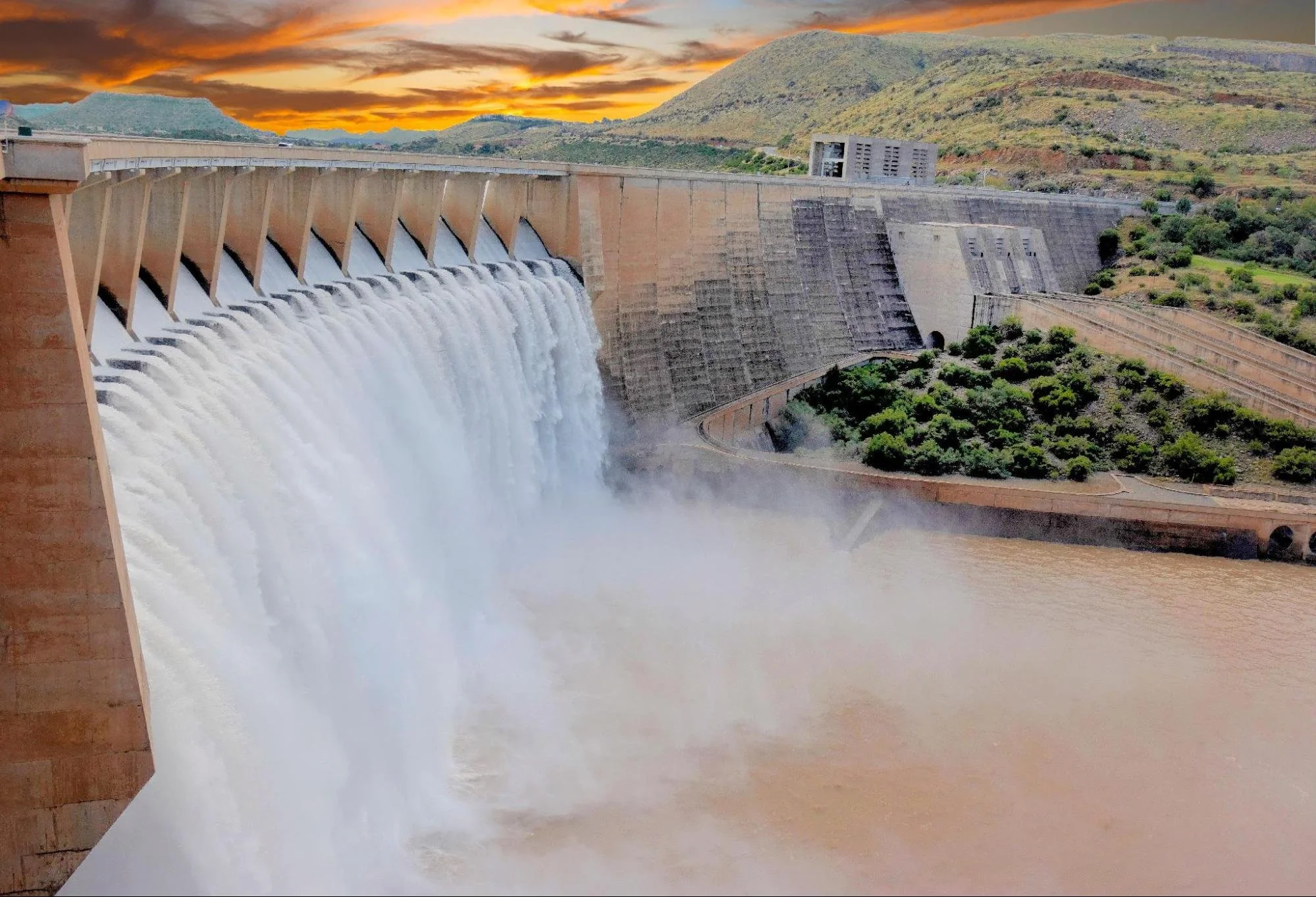
If you have been following the news about AI and local resistance to large, thirsty data centers, you will appreciate these two stories.
The Industrial Revolution is said to have begun in England in the late 18th century, and the man credited with building the first modern factory was Richard Arkwright. In 1771, Arkwright chose to build his mill in Cromford because of its proximity to a reliable water source: a drainage channel from a nearby lead mine that ran warm and never froze, which meant it would never stop turning his wheel.[i]
Arkwright’s use of the local water supply, however, was immediately opposed by other local water users. The first modern factory was in court with its neighbors essentially from the start. Through negotiation, the factory continued to get its water and remain afloat, but eventually the water ran out and the mill shut down in the mid-nineteenth century.[ii]
In 1962, Con Edison announced the country’s largest pumped-storage hydroelectric plant, to be carved into Storm King Mountain on the Hudson at a cost of $234 million. The Federal Power Commission granted the license in March 1965. Local residents with no financial stake sued anyway. The case ran seventeen years. In December 1980, Con Edison agreed to terminate Storm King, reduce fish kills at Indian Point and its other river plants, and fund Hudson ecosystem research.[iii]
Local communities fighting large organizations over resources is a long-standing tradition. For investors, these fights have real meaning: companies that ignore local needs do so at their own peril. Water offers a particularly visible example of a broader issue: a company’s ability to operate and expand depends not only on access to capital and infrastructure, but also on maintaining public consent. In that sense, the needs of the environment, local communities, and long-term corporate interests can converge.
The limit shows up one town at a time
The water demands of large AI infrastructure projects can be significant, particularly in already water-stressed regions. TSMC’s first chip plant in Phoenix uses about 4.75 million gallons a day.[vi]
Now compare water usage to carbon.
With carbon, the people harmed have no authority over the company harming them. A ton of carbon dioxide does the same thing to the atmosphere no matter where it leaves the stack. The damage is spread across everyone on Earth and across the next century. No one living downwind gets a vote on whether the smokestack keeps running. So, a company can keep emitting and keep earning.
Doing better costs money and earns nothing back. That is the usual shape of these problems.
With water, the people affected are often the people holding the permit. Water belongs to a specific river, a specific aquifer, a specific town. The people who may lose access to it are neighbors in one county. And those neighbors have something the atmosphere does not: a vote, a public hearing, and a permit application sitting on the table in front of them.
That is the whole difference. A company that places pressure on a local aquifer is not quietly getting away with something. It is spending down the goodwill of the exact group that decides whether it can build the next building. The environmental and community impact turns into a business cost because the people who experience it may also influence the project’s approval.
For an investor, that means the environmental question and the financial question can increasingly point toward the same answer. You are not necessarily choosing between them.
Arkwright’s neighbors went to court. Con Edison’s neighbors went to court for seventeen years. Today they go to a zoning hearing, and they are winning faster. One research firm that tracks these fights counted at least 75 data center projects blocked or delayed by local opposition in the first three months of 2026, worth roughly $130 billion, about as much as it counted in all of 2025.[vii] By May, close to seventy local governments had bans in place, and more than 300 state-level bills had been filed. Water is the most common objection, appearing in over 40 percent of contested projects.
A Reuters/Ipsos poll in June 2026 found that 14 percent of Americans would support an AI data center in their community.[viii] It is not one political party doing the objecting. Some object to the electric bill, some to the water, some to the noise. Others object to the process itself: secretive negotiations, public subsidies, land use changes, or uncertainty about whether promised jobs and tax revenue will materialize. They all show up to the same hearing.
Companies that earn permission get to keep building
For years, the AI buildout was described as a race for three things: chips, electricity, and money. There is a fourth: a company needs permission to build. Chips, electricity, and money all have a price you can look up. Permission does not, so it never showed up in anyone’s math.
Permission does not show up as a fine. It shows up as a delay. A data center costs billions of dollars; that money is borrowed, and the interest starts running long before the building earns anything. A project stuck in a permit fight for eighteen months is not a public relations problem. It is a very expensive hole.
Water planning is one important part of earning that permission, but it is not the only part. Companies must also address grid capacity, electricity costs, noise, land use, transparency, and whether local residents believe the benefits and burdens are being shared fairly.
Some companies saw the water constraint coming and are addressing it more thoughtfully. TSMC, the Taiwanese company that makes most of the world’s advanced chips, cut tap water use at its Tainan plants by 31 percent by switching to recycled water.[ix] In Phoenix, it is building a 15-acre plant to reclaim its own wastewater, aiming to cut that 4.75 million gallons a day to under 1.2 million.[vi]
Recycling does not make the need for water disappear; it changes where the water comes from, reduces pressure on local supplies, and may help preserve the right to keep operating in a place that might otherwise have resisted further expansion.
AI is here to stay, and demand for resources will continue, but there will be winners and losers. History suggests the winners will be those that manage local resources responsibly, absorb the costs they create, communicate transparently, and engage responsibly with the communities they seek to operate in. The fact that both sides of the political aisle are starting to respond to these concerns at least suggests the message is getting across.
The cost is real, and it is not in the numbers yet
Here is the frustrating part: from the outside, you cannot easily tell TSMC apart from a company that has done nothing.
There is no standard for how companies report water. Some report how much they take out of the ground. Some report how much they use. Those are different numbers, and companies often do not say which one they mean.
Even Google, which discloses more than most, publishes water figures for individual sites without saying how big those sites are or what kind of cooling they use.[x] The numbers are accurate. They just cannot be lined up against anyone else’s.
No rule requires companies to make these numbers comparable, and no company has much reason to volunteer what the rules do not ask for. Even the ones acting in good faith end up publishing figures nobody can check against anyone else’s. So a company can be carrying a real, expensive exposure, a permit it may not get, a town it may lose, and none of it shows up anywhere an ordinary analyst would look.
This is not a guess about which stocks will go up. It is a real cost, sitting on real balance sheets, that nobody is required to show you.
Someone has to do the counting
Calvert, one of the fund managers we use, built its own system for scoring how much water risk a company is carrying, because the public numbers are not consistent enough to do it any other way.
They also push companies directly, raising water use with management, and escalating when those conversations go nowhere, by filing shareholder resolutions and voting against boards.[xi] They are pressing the industry to adopt a shared water reporting standard, like the one that already exists for greenhouse gases.[xii]
Calvert’s 2026 research also identifies AI’s growing demand for reliable, affordable, and clean electricity as a strategic issue.[xiii] Its broader investment principles call for companies to consider community stakeholders, disclose material environmental and social risks, and build trust through transparent communication.[xiv] Together, that framework recognizes that water is part of a wider set of financially material constraints involving infrastructure, affordability, transparency, and relationships with local communities.
That work is a reason we use them, and through the funds you hold, it is being done on your behalf.
The bottom line
You already own the AI buildout. Almost everyone does. It sits inside ordinary index funds whether anyone picked it or not, so whether to participate was never really the question.
The question is whether the people investing on your behalf are asking these companies the same questions the towns are already asking: where will the water and electricity come from, who will bear the infrastructure costs, and has the company earned the community’s trust?
The risk is not simply that a company will run out of water. The larger risk is that it will run out of public consent. Water is one of the fastest ways that can happen.
Understanding that risk and asking the right questions is good for the watershed, good for the community, and good for the shareholder at the same time, for the same reason.
Sources
[i] Cromford Mill, Derwent Valley Mills UNESCO World Heritage Site; siting of the mill on Cromford Sough and Bonsall Brook, 1771.
[ii] Contemporaneous records of litigation by other local water users, and of the decline of Cromford Sough following the cutting of Meerbrook Sough; mill operations ceased in the nineteenth century.
[iii] Scenic Hudson Preservation Conference v. Federal Power Commission, 354 F.2d 608 (2d Cir. 1965); Scenic Hudson–Consolidated Edison settlement, December 1980.
[iv] Shehabi et al., 2024 United States Data Center Energy Usage Report, Lawrence Berkeley National Laboratory, December 2024. The report discusses differences among cooling systems and distinguishes direct from indirect water use.
[v] Shehabi et al. projects U.S. direct data center water consumption of 38–73 billion gallons by 2028. The impact of individual facilities varies by cooling technology, climate and electricity source.
[vi] TSMC Arizona, Industrial Reclamation Water Plant announcement, August 2025; facility water use and projected reduction as reported in trade coverage.
[vii] Data Center Watch, Q1 2026 report on blocked and delayed U.S. data center projects. Figures are a private research firm’s count, not a government total.
[viii] Reuters/Ipsos polling on public support for local AI data center development, June 2026.
[ix] TSMC, Water Stewardship disclosure (Tainan reclaimed water and tap water reduction); see also Calvert Research and Management, “The Water Constraint,” Tales from the Emerging World, Emerging Markets Equity Team, May 2026.
[x] Google, Environmental Report, facility-level water disclosure; comparability limitations as noted by researchers reviewing the disclosures.
[xi] Calvert Research and Management, engagement and proxy voting disclosures covering water stewardship.
[xii] Calvert, “The Importance of Improved Water Risk Metrics in Sustainability Reporting,” Morgan Stanley Investment Management.
[xiii] Calvert Research and Management, “Navigating 2026: Climate, AI, and Economic Shifts,” January 2026.
[xiv] The Calvert Principles for Responsible Investment, including consideration of community stakeholders, material environmental and social disclosure, and transparent communication with communities, governments and regulators.